
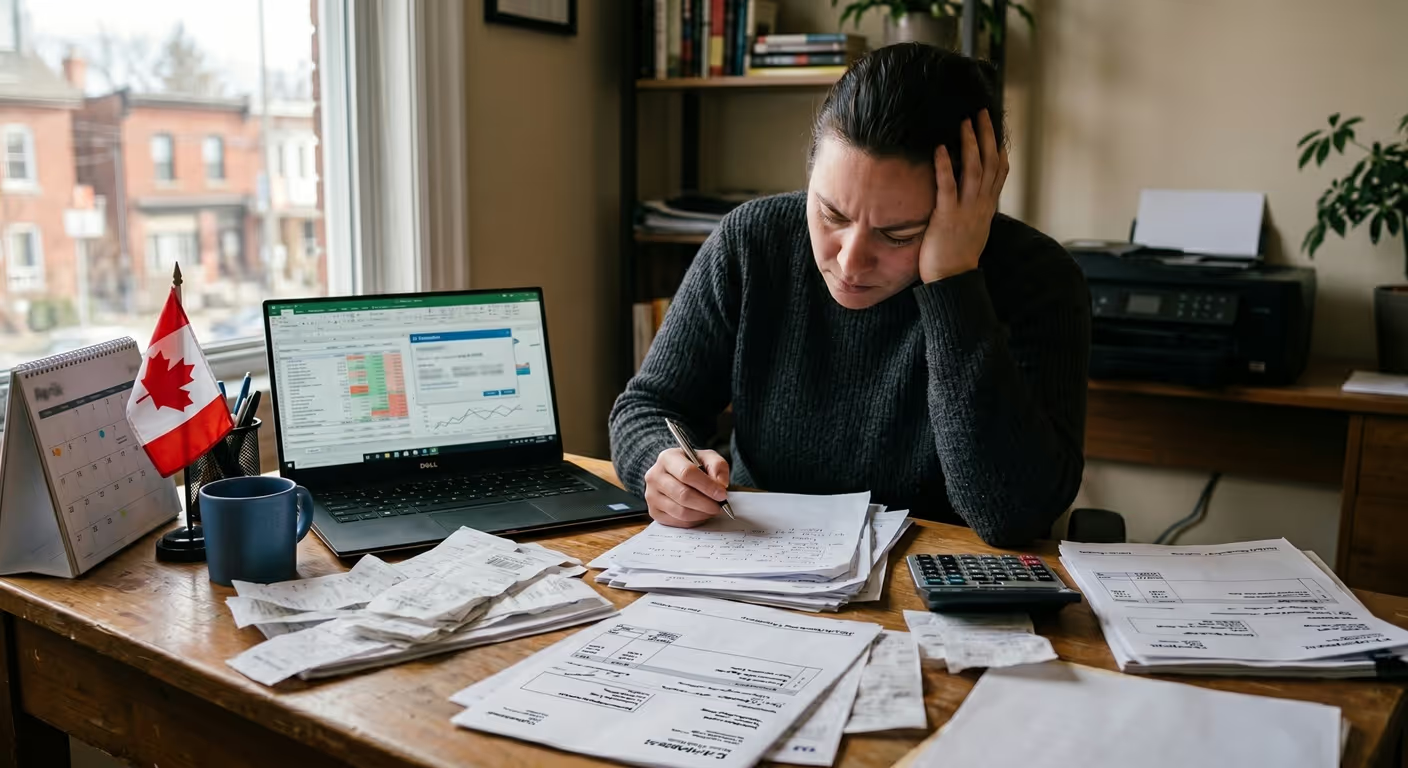


Filing taxes on time is one of the most important responsibilities for self-employed individuals in Canada. Unlike salaried employees, freelancers, contractors, and small business owners are responsible for calculating, reporting, and paying their own income taxes. This creates a higher risk of missing deadlines, especially when business operations are busy or bookkeeping is not properly maintained.
In Canada, the Canada Revenue Agency (CRA) has strict rules for late tax filings. Even if you are only one day late, penalties and interest can start applying depending on your tax balance. For the 2026 tax year, these rules remain strict for self-employed Canadians, particularly those who missed the June 15 filing deadline or the April 30 payment deadline.
This guide explains how late filing penalties work, how CRA calculates interest, and what you can do to reduce financial damage if you miss a deadline.
What Is the Tax Filing Deadline for Self-Employed Canadians in 2026?
For self-employed individuals in Canada, tax filing rules are slightly different from salaried taxpayers. The official filing deadline is June 15, 2026, but the payment deadline for any taxes owed remains April 30, 2026.
This difference is important because even though you are allowed extra time to file your return, CRA still expects payment by April 30. If you miss this payment deadline, interest begins accumulating immediately, even if your return is filed on time in June.
June 15 Filing Deadline
The June 15 deadline applies specifically to individuals who earn self-employment income. This includes freelancers, consultants, gig workers, and independent contractors. CRA provides this extended timeline to give business owners more time to finalize their income and expense records.
However, this extension does not remove financial responsibility. Filing after June 15 results in penalties if you have a balance owing.
April 30 Payment Deadline
The April 30 deadline is critical because it determines when interest starts applying. If you owe taxes and do not pay by this date, CRA begins charging daily compound interest on the outstanding amount.
What Happens If You Miss Both Dates?
If both deadlines are missed, you may face a combination of late filing penalties and interest charges. The longer the delay, the higher the financial impact becomes, especially if you are a repeat late filer.
CRA Late Filing Penalties for Self-Employed Individuals
CRA has a structured penalty system to discourage late filing. The penalty is based on the amount of tax you owe at the time of filing.
The standard penalty starts at 5% of your balance owing, plus an additional 1% for every full month your return is late, up to a maximum of 12 months.
First-Time Late Filing Penalty
If this is your first time filing late, CRA applies a base penalty of 5% of the unpaid tax amount. On top of that, an additional 1% is added for each month the return remains unfiled.
This means even a few months delay can significantly increase the total amount owed. The longer you wait, the more costly it becomes.
Repeat Failure Penalties
If you have previously been penalized for late filing in the last three years, CRA applies a harsher penalty structure. The base rate increases to 10%, and monthly penalties increase as well.
This is designed to discourage repeated non-compliance and ensure timely filing behaviour among self-employed taxpayers.
CRA Interest Charges Explained
Apart from penalties, CRA also charges interest on unpaid taxes. This interest is compounded daily, which means it grows faster than simple interest over time.
Interest starts from May 1 if your balance remains unpaid after April 30. Even if you file your return on time in June, interest will still apply if payment was not made earlier.
The CRA interest rate is updated quarterly and is generally higher than typical bank savings rates, making it costly to delay payments.
Over time, even small balances can grow significantly due to compounding.
Examples of Late Tax Penalties in Canada
To understand the impact, consider a self-employed individual who owes $5,000 in taxes.
If they file three months late, CRA will apply a 5% base penalty plus 3% for the delay period. This results in a penalty of $400, excluding interest charges.
In a second scenario, a repeat late filer with the same balance may face a 10% base penalty plus monthly increases, resulting in a much higher total cost.
These examples show how quickly penalties can escalate when deadlines are missed.
What If You Cannot Pay Your Taxes on Time?
Many self-employed individuals face cash flow challenges, especially during slow business months. CRA understands this and allows taxpayers to file their return even if they cannot immediately pay the full amount.
It is always better to file on time, even without payment, because filing late triggers additional penalties on top of interest.
CRA also offers payment arrangement options where taxpayers can pay in instalments based on their financial situation. However, interest continues to accumulate until the balance is fully cleared.
Can CRA Waive Penalties?
In certain situations, CRA may cancel or reduce penalties through the Taxpayer Relief Program. This is not automatic and requires a formal request.
CRA may consider relief if delays were caused by circumstances beyond your control, such as serious illness, natural disasters, or system failures. Financial hardship may also be considered, but approval is not guaranteed.
Each case is reviewed individually, and proper documentation is required to support the request.
How to Avoid Late Filing Penalties in the Future
The best way to avoid penalties is to maintain consistent bookkeeping throughout the year instead of waiting until tax season. This ensures your income and expenses are always up to date.
Many self-employed individuals also benefit from setting aside a portion of their income monthly for tax payments. This helps avoid large unexpected balances in April.
Working with a professional accountant can also reduce risk, especially for individuals with multiple income sources or complex deductions. Proper planning ensures deadlines are met and penalties are avoided.
Final Thoughts
Late tax filing in Canada can quickly become expensive due to combined penalties and interest charges. For self-employed individuals, understanding both the June filing deadline and the April payment deadline is essential to avoid unnecessary financial stress.
If you are unsure about your tax situation or need help managing filings, working with a professional accounting firm can make the process much easier and more accurate.
At GTA Accounting, we help self-employed individuals and small business owners in Canada with tax filing, bookkeeping, CRA compliance, and penalty reduction strategies. Our goal is to ensure you stay compliant while minimizing tax risks and avoiding unnecessary penalties.