


For Ontario businesses, HST compliance is not optional. Missing a filing deadline or making a reporting error can lead to penalties, interest charges, cash flow issues, and unnecessary communication with the CRA. Many businesses face problems not because they avoid taxes, but because they do not fully understand when to file, how much to remit, or what information is required.
In 2026, with increased CRA enforcement and more digital reporting, businesses need better control over their tax and bookkeeping processes. Whether you are a sole proprietor, a growing corporation, or a professional service provider, knowing your HST filing schedule is critical for financial planning and compliance.
This guide provides a complete, Ontario-specific HST filing calendar for 2026, explains who must file, what is required for each return, and how businesses can reduce risk through proper bookkeeping, reporting, and professional support.
What Is HST and Who Must File?
The Harmonized Sales Tax (HST) is a 13% consumption tax in Ontario that combines federal GST and provincial sales tax. Most businesses that sell taxable goods or services must:
- Register for an HST account
- Charge HST on taxable sales
- Collect and remit HST to the CRA
- File HST returns on time
You are required to register if your business earns more than $30,000 in taxable revenue in a 12-month period. Voluntary registration is also allowed and may be beneficial if you want to claim input tax credits (ITCs).
HST Filing Frequencies
Your filing frequency is assigned by the CRA when you register:
You may also request a different filing frequency depending on your cash flow and administrative preferences.
HST Filing Deadlines for 2026
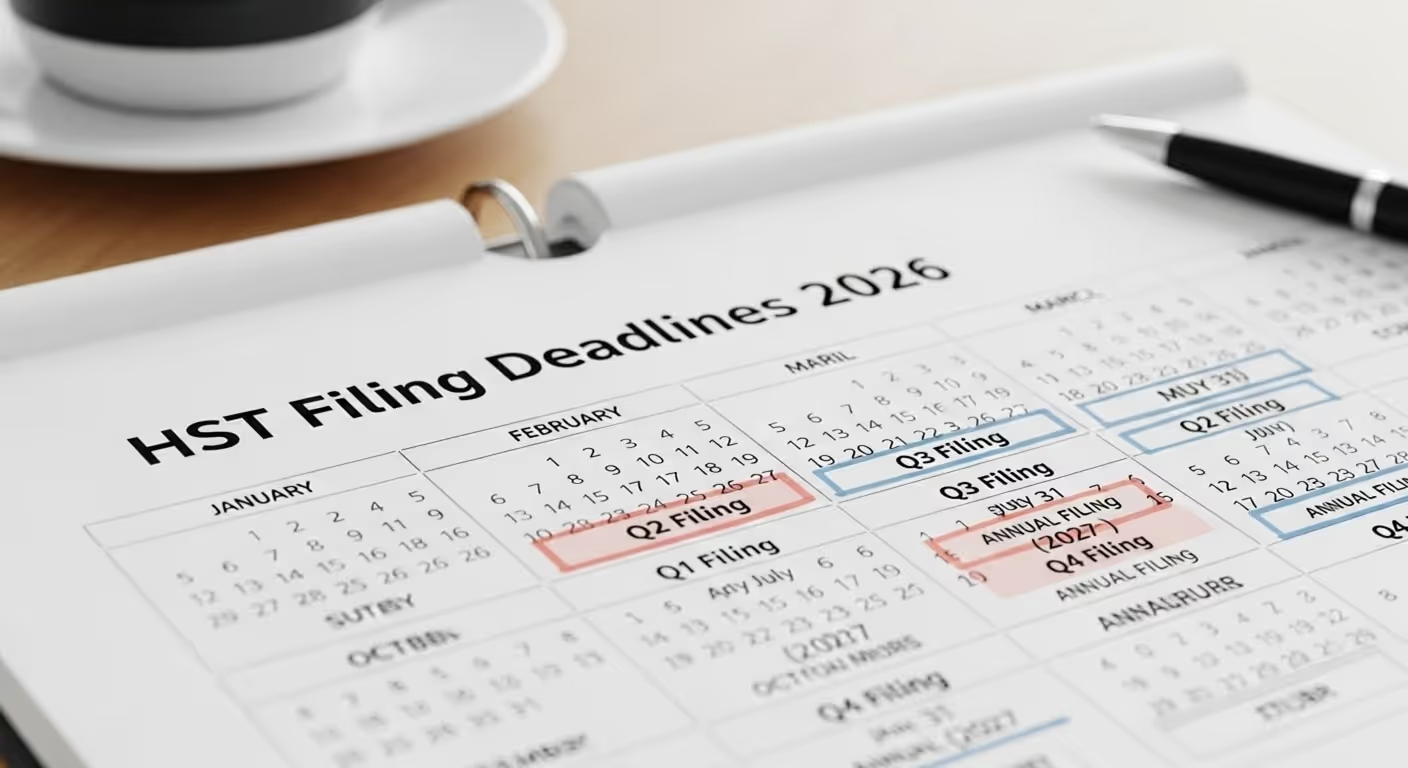
Below is the full HST calendar for Ontario businesses in 2026.
Monthly Filers
Monthly filers must submit their return and payment one month after the reporting period ends.
Quarterly Filers
Quarterly filers file one month after the quarter ends.
Annual Filers
Annual filers usually have the filing deadline three months after year-end, but the payment is due earlier.
What Information Is Required for HST Filing?
To file an accurate HST return, Ontario businesses must maintain clear and up-to-date financial records throughout the reporting period. Incomplete or inaccurate information is one of the most common reasons for CRA reassessments and penalties.
You will need the following details for each HST return:
- Total taxable sales: The total value of all sales that are subject to HST, excluding exempt or zero-rated supplies.
- Total HST collected: The actual HST charged and collected from customers during the reporting period.
- Input tax credits (ITCs): The HST you paid on eligible business expenses that can be claimed as a credit.
- Adjustments or corrections: Any changes from previous periods, such as bad debts or credit notes.
- Net tax payable or refund amount: The difference between HST collected and ITCs claimed.
Supporting documentation is equally important. You should retain:
- Sales invoices and receipts
- Expense receipts showing HST paid
- Bank and credit card statements
- Contracts and supplier invoices
Accurate bookkeeping is essential because the CRA expects your HST return to match your financial records. Even small errors can result in reviews, reassessments, or delays in receiving refunds.
Penalties for Late HST Filing
Failing to file or remit HST on time can quickly become expensive. The CRA applies both penalties and interest to overdue balances.
The standard penalties include:
- A 1% penalty on the outstanding balance as soon as the deadline is missed
- An additional 0.25% per month on the unpaid amount, for up to 12 months
- Daily compounded interest on the total balance owing
Beyond the financial cost, repeated late filings increase the risk of:
- CRA compliance reviews
- Formal audits
- Requests for supporting documentation
- Potential restrictions on your business account
Consistent late filings can also damage your credibility when applying for loans, government funding, or grants.
Common HST Filing Mistakes
Many Ontario businesses face HST issues not because of intentional non-compliance, but because of avoidable reporting mistakes.
Common problems include:
- Misclassifying taxable, zero-rated, and exempt sales
- Claiming ITCs on ineligible or personal expenses
- Missing a filing deadline or forgetting to file a period entirely
- Using the wrong reporting period or fiscal year
- Not reconciling sales and bank data before filing
- Poor record-keeping or missing receipts
These errors often result in reassessments, penalties, interest charges, and unnecessary time spent responding to CRA notices.
How to Stay Compliant in 2026
Staying compliant with HST requirements requires consistency and basic financial controls. Practical steps include:
- Using accounting software that tracks HST automatically
- Reconciling bank accounts and sales records monthly
- Keeping digital copies of all invoices and receipts
- Reviewing HST reports before each filing
- Setting calendar reminders for all filing and payment deadlines
- Reviewing CRA correspondence promptly
Many businesses choose to outsource these tasks to professionals who provide HST filing services, bookkeeping, and CRA compliance support. This reduces the risk of errors and ensures deadlines are not missed.
When Should You Use Professional Help?
You should consider working with a professional if:
- Your HST filings are inconsistent or confusing
- You are behind on returns or payments
- You have received a CRA review or audit notice
- Your business is growing, restructuring, or incorporating
- You operate in multiple provinces or have complex tax rules
Professional support helps ensure accurate reporting, timely filing, and proper handling of CRA correspondence.
This is where Gta Accounting can support Ontario businesses with accurate filings, reporting, and ongoing compliance.
Many Ontario business owners rely on Gta Accounting – HST Filing Services to manage their HST returns, bookkeeping, payroll reporting, and CRA communication efficiently.
Final Thoughts
HST compliance is a core responsibility for Ontario businesses. Understanding your filing frequency, deadlines, and reporting obligations helps you avoid penalties and maintain clean records with the CRA.
Use this 2026 HST calendar to plan ahead, stay organized, and ensure your business meets all filing requirements on time.
If your business needs support with HST filings, bookkeeping, or CRA compliance, professional guidance can help you stay focused on running your business while avoiding unnecessary tax issues.